
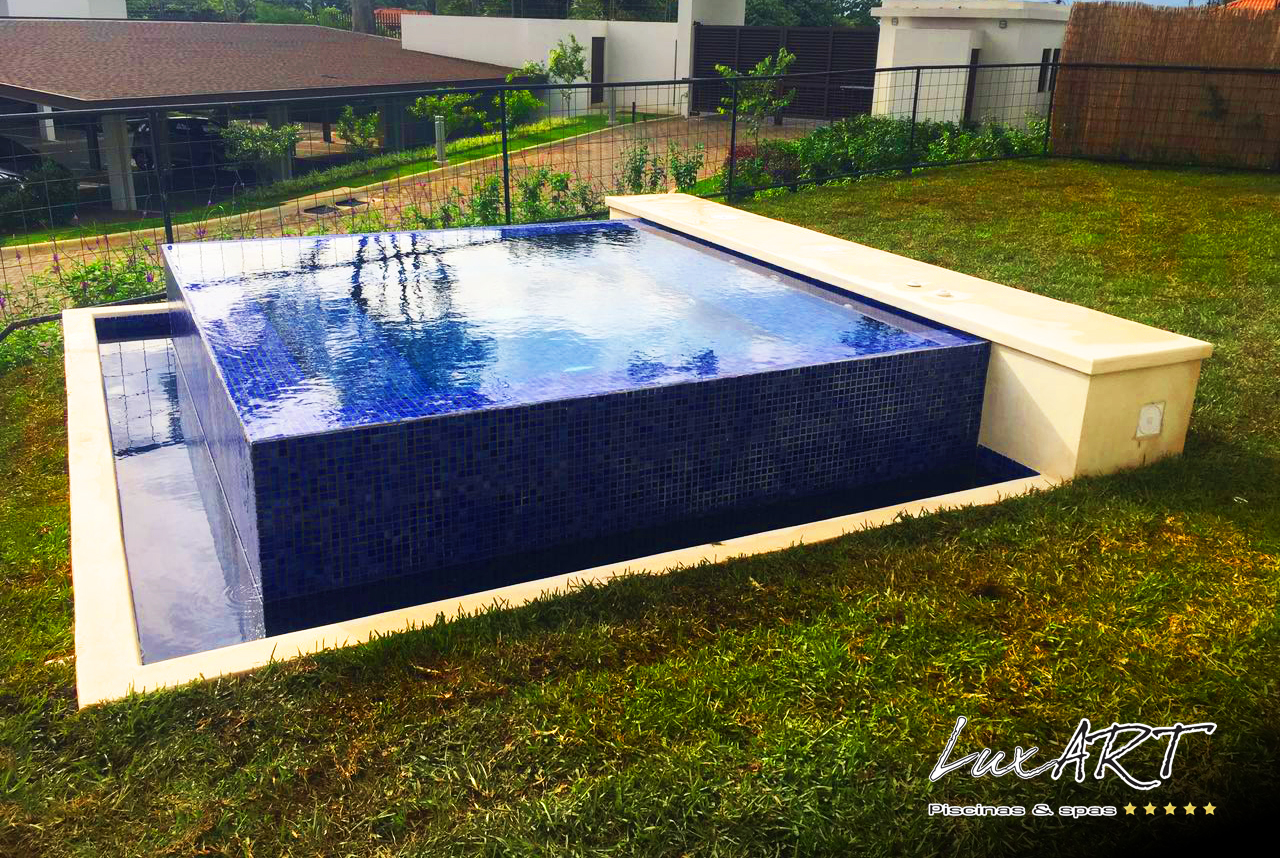
Short answer: a spa can be integrated with a pool in three ways: raised with a spillover into the pool, at the same level inside the pool, or stand-alone elsewhere in the garden. Ideally it's planned during design, so it can share equipment and plumbing, the hydromassage and heatingare well defined, and it looks like part of a single project.
A spa is probably the feature that adds the most use to a pool: it's enjoyed at night, on cool days and all year round.
Three ways to integrate it
1. Raised with a spillover
The spa is built a few centimeters above the pool level and its water spills into the pool as a sheet or waterfall.
- Advantages: it's the most eye-catching option; the falling water adds sound and movement, and the raised edge doubles as seating.
- Best for: residential pools where the spa is the star.
2. At the same level
The spa is part of the pool, separated by a low wall or a bench.
- Advantages: a clean, continuous design, ideal for modern styles. Easy access between pool and spa.
- Things to consider: since they share water, keeping the spa hot is harder if it isn't well separated.
3. Stand-alone
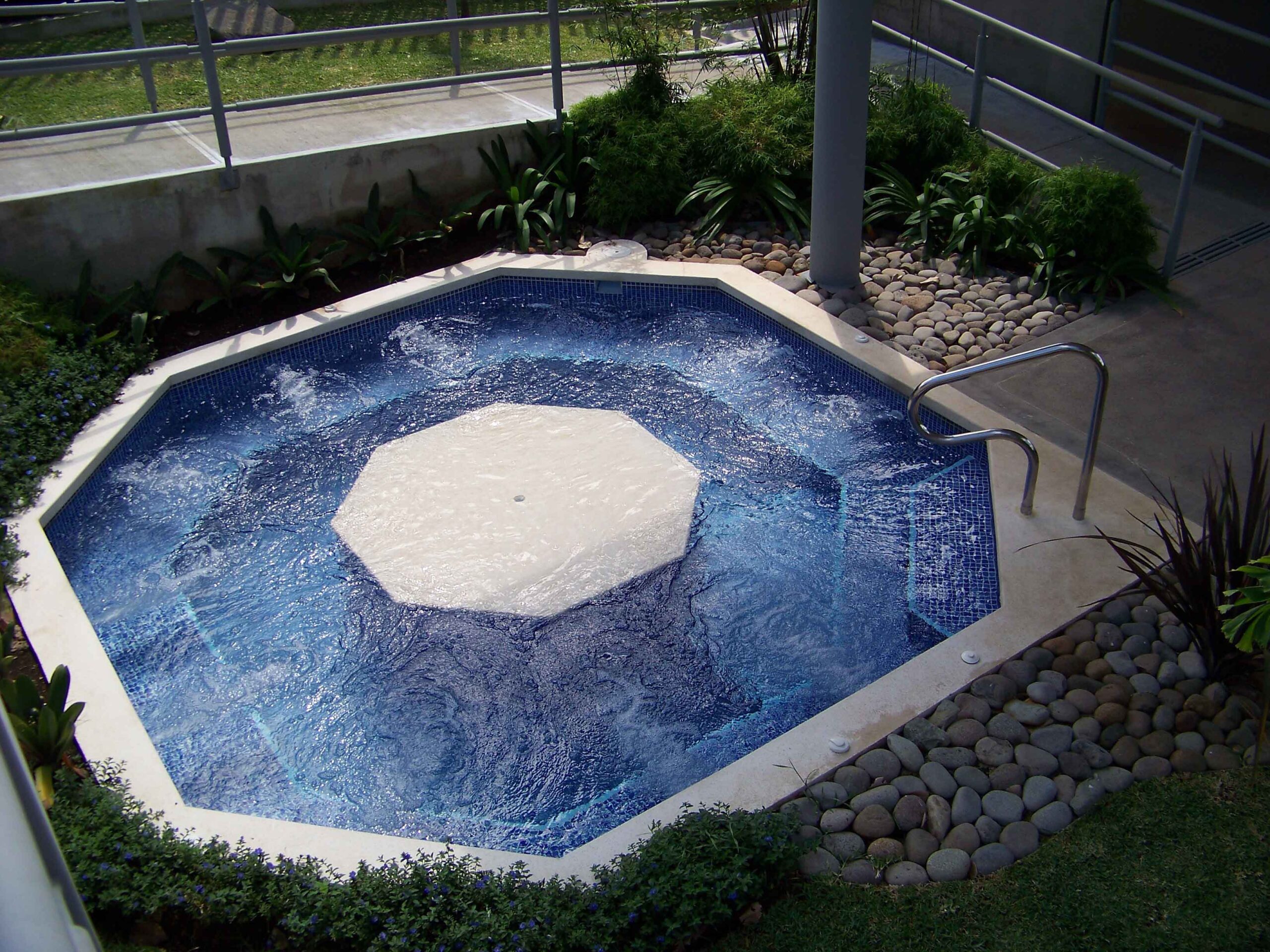
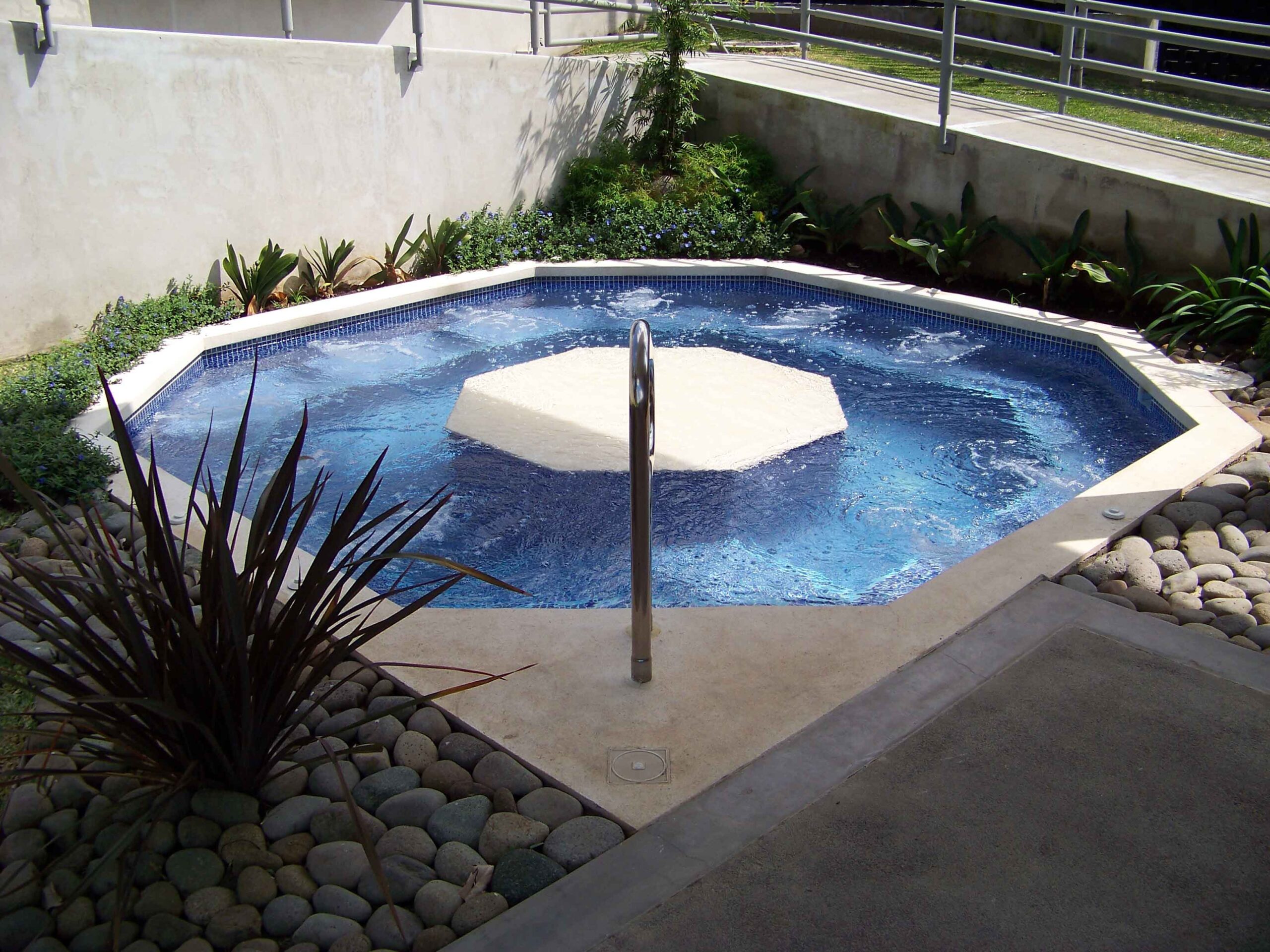
A separate spa on a terrace, a deck or a corner of the garden.
- Advantages: you heat only the spa, which costs less. It's the solution when there's no pool or space is limited.
- Best for: small yards, terraces or homes that want a spa without a large pool.
Hydromassage: what makes the difference
- Water jets in the walls, at back, waist and foot height.
- Air jets or bubblers in the floor or benches, which give a softer sensation.
- Benches at different heights, for people of different heights and for sitting or reclining.
- A dedicated hydromassage pump, separate from the filtration pump, so the jets have real power.
The placement of each jet is defined in the design. When it's well planned, the hydromassage feels comfortable instead of just making noise.
Heating
In the Central Valley and higher areas, an unheated spa gets little use. The most common options:
- Heat pump: efficient for keeping a steady temperature.
- Gas: heats quickly, ideal for turning the spa on only when it will be used.
- Solar: as support, to lower running costs.
A cover on the spa when it's not in use greatly reduces heat loss.
Shared equipment and plumbing
When the spa is integrated with the pool, the filter, the sanitation system and even the heater can be shared, with valves that direct the water to one or the other. This lowers the equipment cost, but requires good hydraulic design. Stand-alone spas have their own compact equipment.
Finishes and details
- Glass mosaic inside, for its resistance to hot water and chemicals.
- Comfortable edges, rounded and non-slip.
- Steps with handrails for getting in and out safely.
- Interior LED lighting in warm tones for a relaxing atmosphere.
- Exterior cladding in stone, porcelain tile or mosaic, to match the style of the house.
Spa maintenance
Hot water favors bacteria and uses up chlorine faster, so a spa needs:
- Checking chlorine and pH more often than the pool.
- Cleaning the jets and the filter regularly.
- Changing the water periodically in stand-alone spas, depending on use.
- Showering before getting in, to reduce oils, sunscreen and sweat in the water.
Safety
- Don't exceed 40 °C (104 °F) .
- Limit soaking time, especially for children, pregnant women and people with blood pressure problems.
- Suction outlets with anti-entrapment covers.
- A lockable cover if there are young children in the house.
Frequently asked questions
Can a spa be added to an existing pool?
Yes. A raised spa can be built next to the pool, or a stand-alone one, using part of the existing equipment. The space, the structure and the capacity of the pump and filter need to be checked.
How many people fit in a spa?
It depends on the size and the bench layout. A residential spa is usually designed for four to eight people.
How much does it cost to keep it hot?
It depends on the size, the location, the type of heater and whether a cover is used. With a heat pump and a cover, the cost stays moderate.
A built-in spa or a portable one?
A portable hot tub installs quickly, but it has a fixed shape and size and looks like a separate piece of furniture. A built-in spa blends into the design of the pool and the house, lasts longer and adapts to the space.
Can the spa be used as a kiddie pool?
With the water at ambient temperature and no hydromassage, it can work as a play area for young children, always with supervision.
Spas with LuxART
At Piscinas LuxART we design and build raised, integrated and stand-alone spas, with hydromassage, heating and lighting. See our residential projects and tell us your idea.