
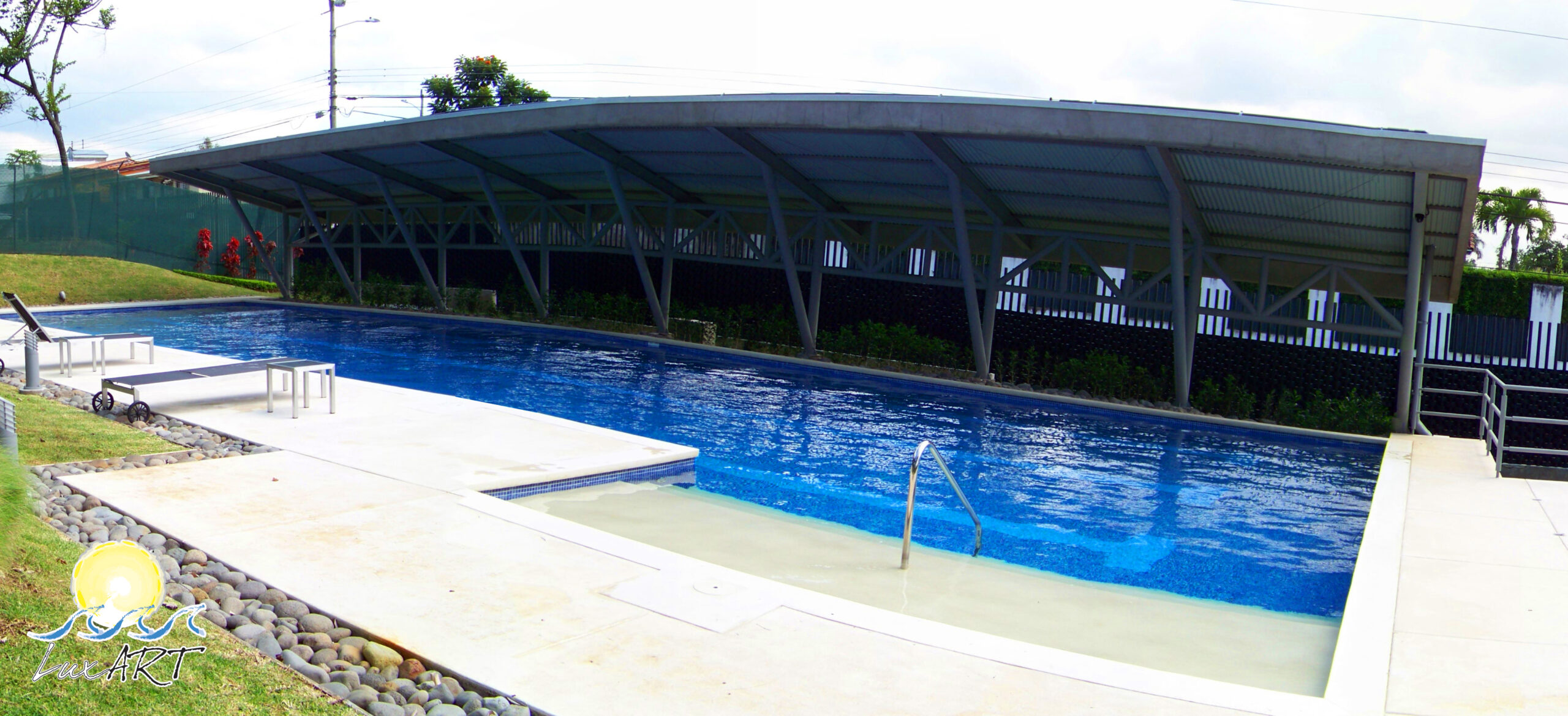
Short answer: a hotel or condominium pool gets far more use than a home pool, so it needs a design made for many people, materials and equipment built for heavy use, safety and accessibility for all kinds of users, compliance with the Ministry of Health's sanitary regulations and a professional maintenance plan with frequent water-quality checks.
For a hotel, the pool is part of the experience guests remember and photograph. For a condominium, it's one of the common areas that adds the most value to the properties.
Design: plan for real use
Capacity. The pool should be sized for the number of people who will use it at peak occupancy, not for the average.
Separate zones. The best commercial pools separate uses:
- Kids' area with shallow water or a beach entry.
- Relaxation area with underwater benches, sun shelves and shade.
- Swimming area with lanes for those who exercise.
- Spa on its own, nearby but independent.
Experience. At hotels, features such as waterfalls, islands with palm trees, swim-up bars or infinity edges make the pool an attraction in itself. Condominiums tend to value function more: lanes, shade and a comfortable social area.
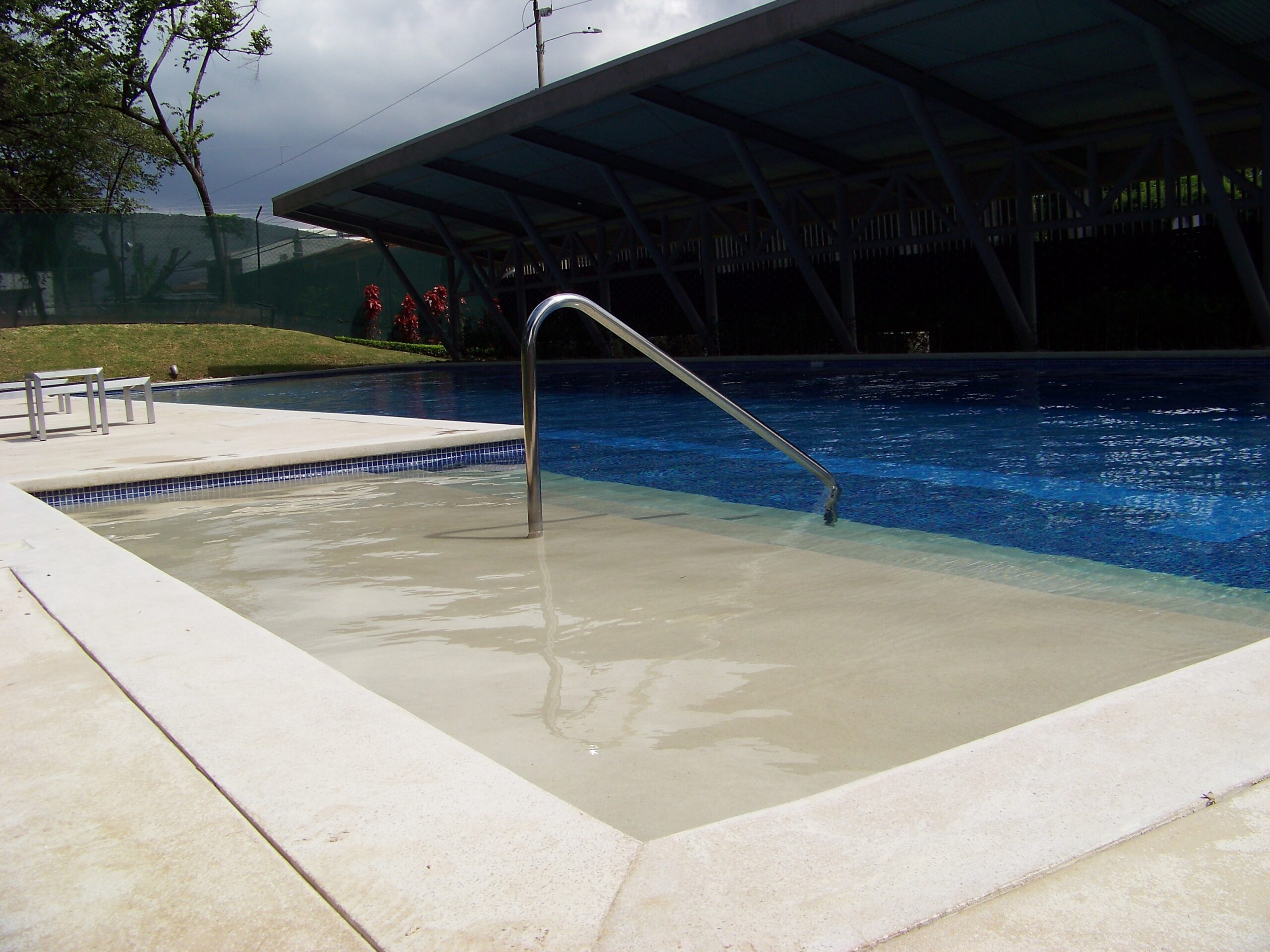
Accessibility. Wide steps with handrails, gradual entries and, where appropriate, pool lifts for people with reduced mobility.
Construction: durability above all
- Well-engineered reinforced concrete structure.
- Durable, non-slip finishes: glass mosaic, porcelain tile or natural stone inside; non-slip decking around it.
- Equipment sized for heavy use, with extra filtration and sanitation capacity.
- A spacious equipment room, ventilated and accessible for daily maintenance.
- Efficient equipment: variable-speed pumps, LED lighting and, where it makes sense, solar heating or a heat pump. In a pool that runs all day, efficiency shows up clearly in the costs.
Regulations and safety
Pools for shared use must meet the Ministry of Healthsanitary requirements, which cover water quality, filtration and sanitation, showers and restrooms, signage and safety features. These requirements must be built into the design from the start.
It's also wise to have:
- Depth markings on the edge.
- Visible pool rules and hours.
- Rescue equipment within reach.
- Suction outlets with anti-entrapment covers.
- Barriers that control access by unsupervised children.
Maintenance: the other half of the project
A commercial pool isn't maintained the same way as a residential one:
- Daily checks, or several per week, of chlorine and pH, with a written log.
- Frequent cleaning of the surface, floor, skimmers and baskets.
- Constant equipment checks, because one failure takes the pool out of service.
- Scheduled preventive maintenance of pumps, filters, chlorinators and lighting.
- A plan for high season, when occupancy and use multiply.
Having a provider that handles maintenance and can also take care of repairs keeps the pool from being closed for days.
Where the operating budget goes
In a commercial pool, monthly costs are concentrated in four areas:
- Electricity. Pumps run many hours a day. Switching to variable-speed pumps and LED lighting is the upgrade with the biggest impact.
- Chemicals. With high occupancy, more are used. A salt chlorinator or supplementary systems such as ozone or UV light reduce purchases and stabilize the water.
- Water. Evaporation, backwashing and splashing must be replaced every day. A night cover and efficient filters help.
- Labor and repairs. A preventive maintenance plan costs less than emergency repairs and avoids closing the pool.
Reviewing these four points once a year shows where savings are possible.
Remodeling a commercial pool
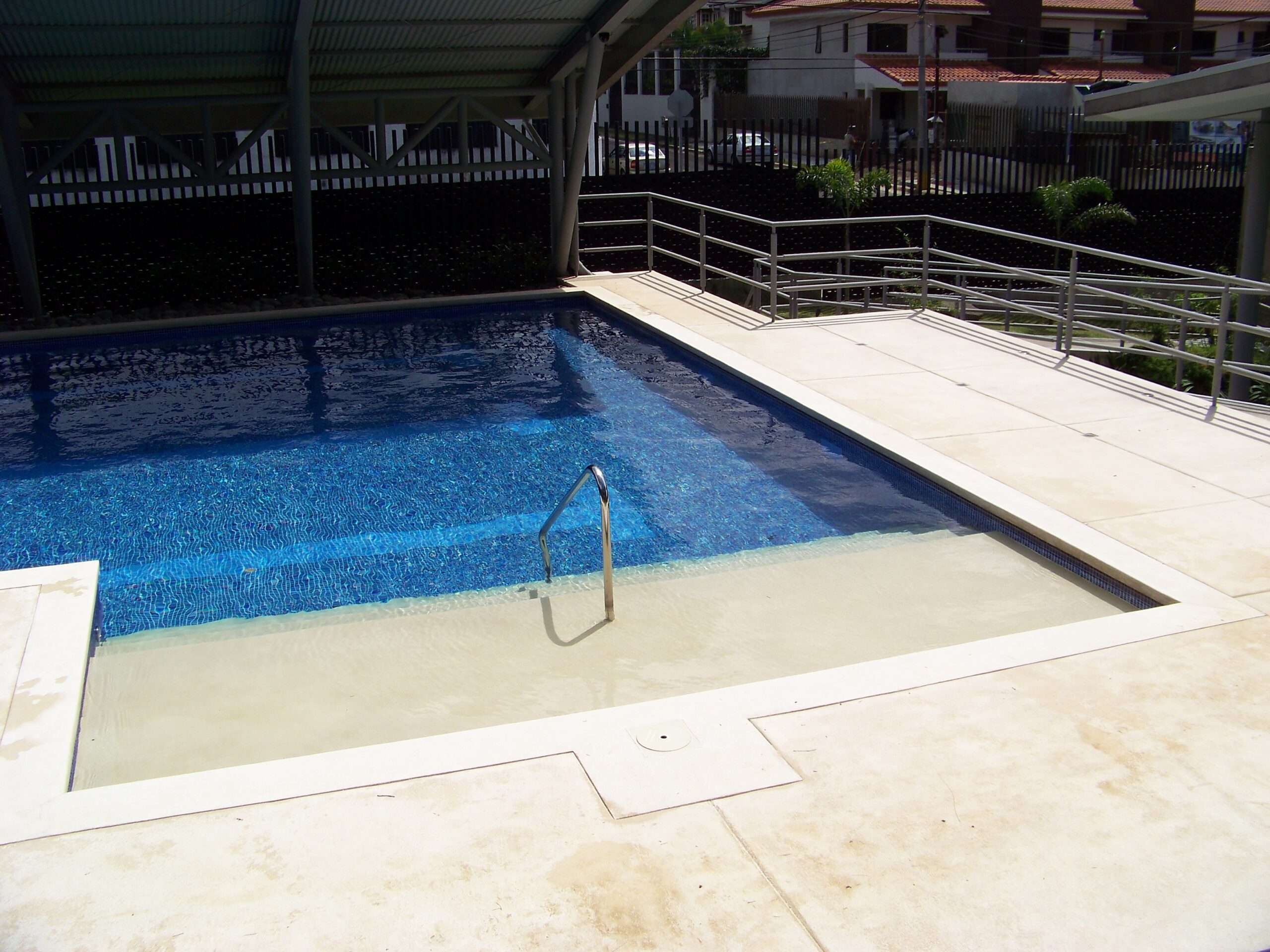
Many hotels and condominiums have pools that work but look dated or cost too much to run. A remodel can:
- Renew the finish and the surrounding deck.
- Add beach entries, benches or a spa.
- Replace the equipment with more efficient units.
- Improve the lighting for evening use.
Scheduling the remodel in the low season reduces the impact on guests or residents.
Frequently asked questions
How often should a condominium pool be maintained?
It depends on use, but several visits per week and frequent water checks are usually needed.
Which finish lasts longest in a hotel pool?
Glass mosaic, porcelain tile and natural stone hold up very well to heavy use, sun and chemicals.
Can the pool be remodeled without closing it for long?
With good planning in stages, closure times are kept to a minimum.
Commercial pools with LuxART
Piscinas LuxART has designed and built pools for hotels, condominiums and businesses in Costa Rica, and offers maintenance and technical service for commercial pools. See our commercial projects service or request a visit.