

Short answer: a pool on the coast faces three challenges that a pool in the Central Valley doesn't: sandy, wet soil with a high water table, salt air that corrodes metal and equipment, and very intense sun that degrades finishes and burns off chlorine. That's why it needs a structure designed for the site, materials that resist salt and sun and protected equipment in a ventilated equipment room.
In Costa Rica, from Jacó and the Central Pacific to Guanacaste and the Caribbean, a pool is almost essential for a beach house, a hotel or a condominium. Well planned, it lasts many years with few problems.
1. The site: sand, moisture and water table
Near the ocean the soil is often sandy and groundwater sits close to the surface, especially in the rainy season.
- Soil study. Before designing, it's worth knowing how firm the ground is and at what depth water appears.
- A well-engineered reinforced concrete structurethat withstands groundwater pressure when the pool is empty.
- Drainage and a hydrostatic relief valve. They keep groundwater from lifting the pool or damaging the structure.
- Never drain the pool without professional advice, especially in the rainy season: with a high water table, an empty pool can suffer serious damage.
2. Salt air and corrosion
Salty air attacks everything metal: railings, ladders, lights, pumps, electrical panels and even the steel in the structure if the concrete doesn't protect it well.
- Marine-grade stainless steel for railings, ladders and fittings.
- Proper concrete cover over the steel in the structure.
- An enclosed, ventilated equipment room, away from the direct sea breeze.
- Quality equipment, with housings and components designed for salty environments.
- Regular inspection of electrical panels and connections.
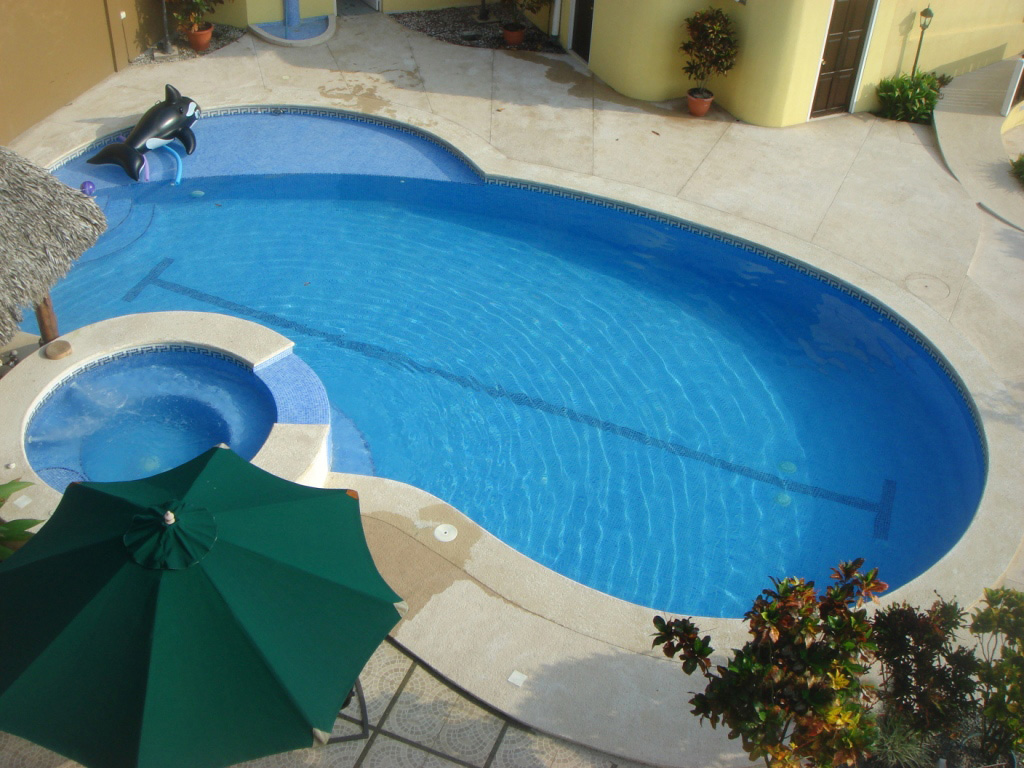
3. Intense sun
UV radiation on the coast is strong almost all year.
- Chlorine is used up faster. Sunlight breaks down free chlorine; that's why coastal pools often use a stabilizer at the correct dose, or a salt chlorinator that produces chlorine continuously.
- Finishes fade. Paints lose color and wear out faster. Glass mosaic, porcelain tile and natural stone hold up much better.
- The surrounding deck gets hot. It's best to use light-colored, porous materials that won't burn your feet.
- Evaporation is high. A cover reduces the loss of water and chemicals.
4. Recommended materials
| Element | Recommended on the coast |
|---|---|
| Interior finish | Glass mosaic, porcelain tile or sealed natural stone |
| Coping and deck | Stone or light-colored non-slip concrete |
| Metals | Marine-grade stainless steel |
| Equipment | Brands with parts available in Costa Rica and rated for salt |
| Lighting | Low-voltage LED, sealed for pool use |
5. A design made for the beach
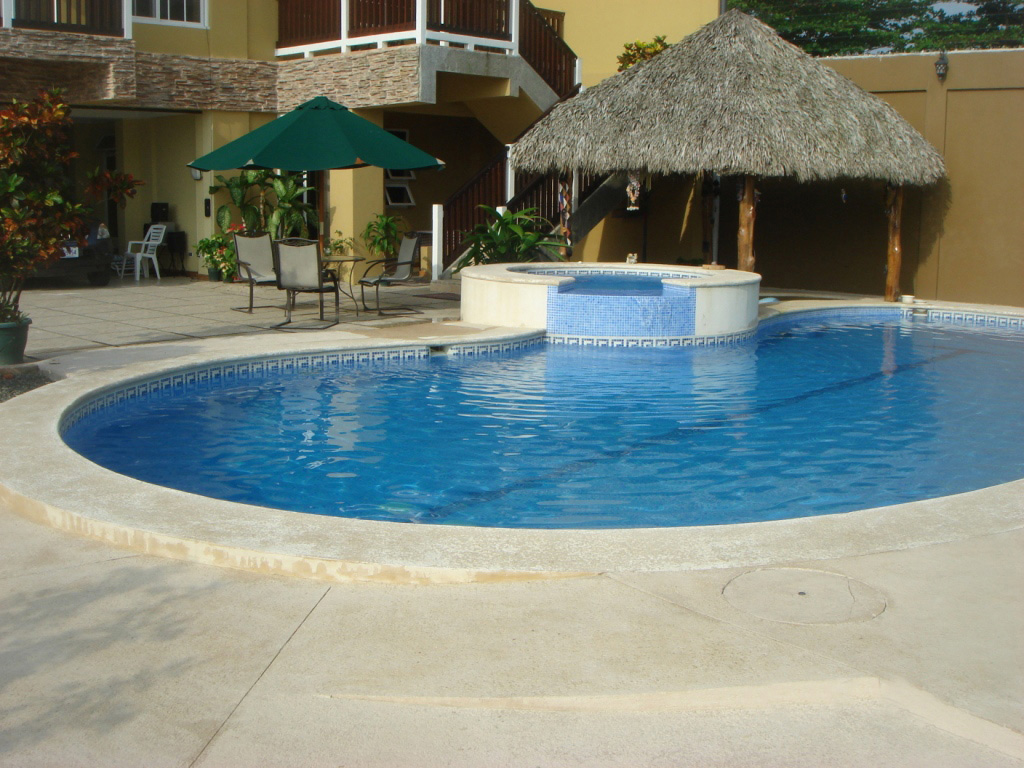
- Shade. A thatched rancho, a pergola or palm trees around the pool shade part of the water and the lounging areas.
- Shallow areas. Underwater benches and beach entries are the most used features in hot climates: for sitting in the water, for children and for conversation.
- Free-form shapes and natural materials. They blend into the coastal landscape better than very rigid shapes.
- Showers and foot rinses before entering, to reduce the sand and sunscreen that end up in the water.
- A shaded, protected equipment room, with easy access for the technician.
- The view. On lots that slope toward the ocean, an infinity edge makes the most of the scenery.
6. Maintenance at a beach house
Many beach houses sit empty for weeks. In those cases:
- Salt chlorinator keeps the water sanitized without anyone at the house.
- A programmed variable-speed pumpfilters every day with low power use.
- Regular maintenance visits, even when no one is using the pool.
- A check before each high season: Easter week, December and the mid-year school holidays.
Frequently asked questions
Can the pool be filled with seawater?
It isn't usual. Seawater carries sand, organisms and very high salinity that damages equipment and finishes. If you want the feel of salt water, a salt chlorinator works at a much lower salinity.
Does a beach pool need more maintenance?
Yes: sun, sand, wind and salt air demand more attention to chemicals and equipment. With good design and a maintenance plan, the effort stays reasonable.
What about sand getting into the pool?
It helps to have showers or foot rinses before entering, a good filter and frequent vacuuming.
Coastal pools with LuxART
Piscinas LuxART has built pools for hotels and homes in beach areas such as Jacó, with structures, materials and equipment designed for the coast. See our commercial projects service or tell us about your project.