
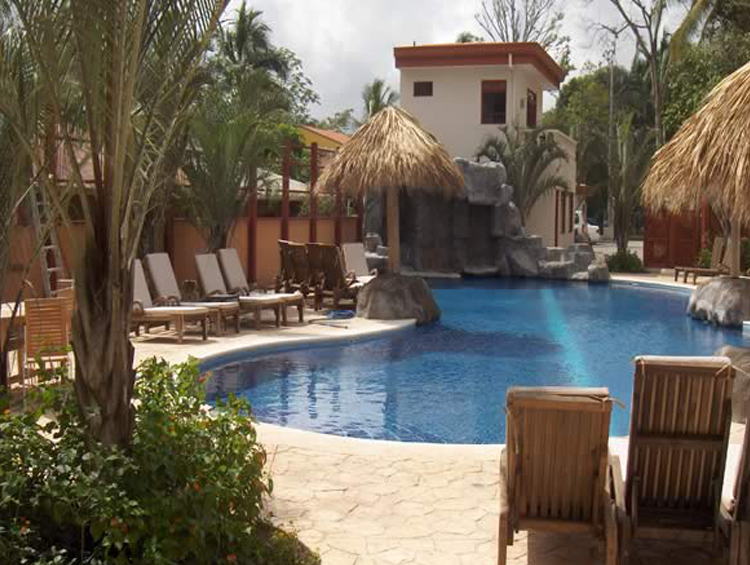
Short answer: a beach house pool is planned differently from one in the Central Valley. You need to study the sandy soil and groundwater, confirm water availability to fill it, design it for the heat and intense sun, use materials that resist salt air, review the coastal permits and plan how it will be maintained when the house is empty or rented.
Guanacaste, Jacó and the Central Pacific are home to many vacation homes and rental properties. There, the pool isn't a luxury: it's the most used feature and the one that weighs most when guests choose where to stay.
1. Before designing: the site and the water
Soil and water table. On the coast it's common to find sand and groundwater close to the surface. A soil study defines the foundation, the drainage and whether a hydrostatic relief valve is needed to protect the pool.
Water availability. In several parts of Guanacaste, water is scarce in the dry season. Before building, it's wise to confirm with AyA or the local ASADA the conditions for filling the pool and replacing evaporation, which is high on the coast.
Site access for construction. Gravel roads, long distances and rain can complicate the delivery of materials and machinery. Planning for it from the start avoids delays.
2. Design for the heat
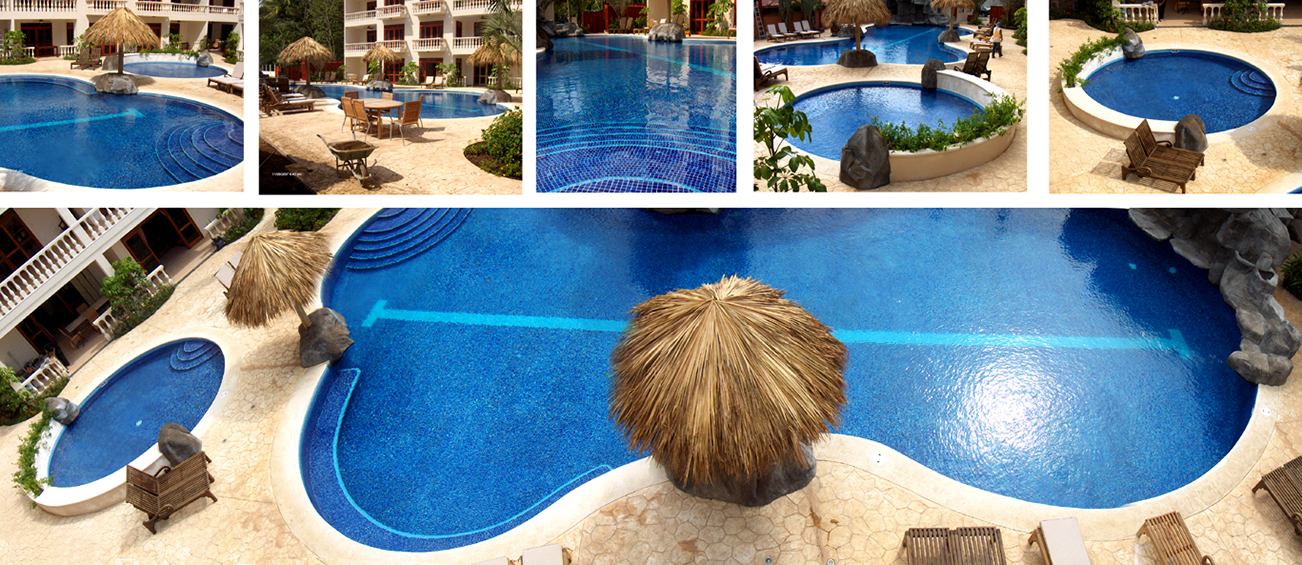
- Areas for lounging in the water: underwater benches, sun shelves and beach entries. In the heat, people spend more time sitting in the water than swimming.
- Shade: a thatched rancho, a pergola or palm trees around the pool.
- Water that doesn't overheat: on the coast the water can get too warm; partial shade and waterfalls help cool it.
- The view: on lots that slope toward the ocean or the mountains, an infinity edge makes the most of the scenery.
- Connection to the house: the pool as the center of the social area, close to the terrace, the rancho and the grill.
3. Materials for the coast
- Finishes that resist sun and salt: glass mosaic, porcelain tile or sealed natural stone.
- Light-colored, non-slip decks that stay cool.
- Marine-grade stainless steel for railings and ladders.
- An equipment room protected from the sea breeze and the rain, with good ventilation.
4. Equipment for houses that sit empty
- Salt chlorinator, to keep the water sanitized continuously.
- A programmed variable-speed pumpfilters every day with low power use.
- Solar panels for pumping, making use of the region's abundant sunshine.
- Automation, to check the pool's condition remotely.
5. Permits on the coast
Besides plans registered with the CFIA and the municipal permit, the following may apply on the coast:
- The rules of the maritime-terrestrial zone and the coastal zoning plan, if the property is in the strip near the ocean.
- The SETENA environmental clearance, depending on the size and location of the project.
- The condominium bylaws, in gated developments.
It's best to review them before finalizing the design.
6. If the house is rented out
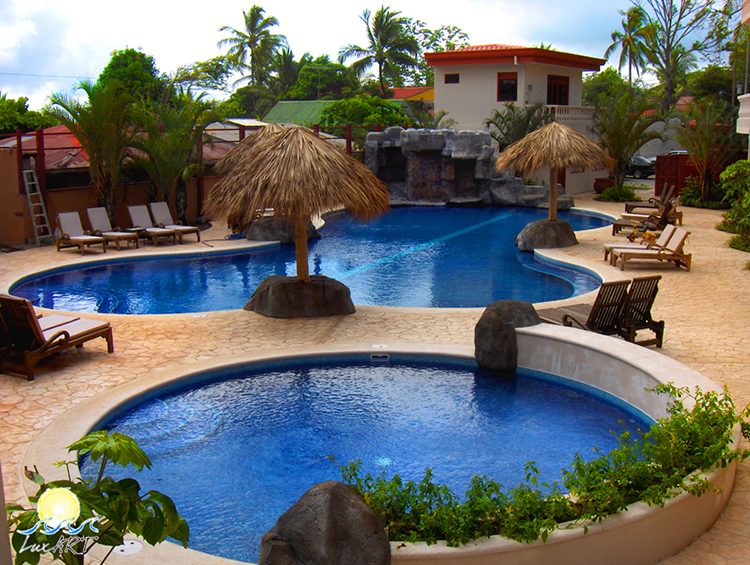
- An attractive pool improves the listing photos, the reviews and the occupancy.
- The shallow areas and its night lighting are among guests' favorite features.
- The safety is essential: railings or covers if families with children are welcome, safe suction grates and marked depths.
- The maintenance between bookings must be sorted out before opening the calendar.
7. Maintenance from a distance
A beach house is often far from where the owner lives. Before building, decide who will maintain the pool, how often, and how you'll receive reports. Good design and good equipment reduce the work, but don't eliminate it.
How the project is managed remotely
Many beach house owners live in the Central Valley or abroad. For construction to move forward without you on site:
- An initial site visit with the builder and, if possible, the home's architect.
- Design and budget approved before starting, with a schedule by stages.
- Photo reports at each stage: excavation, structure, plumbing and electrical, finish and start-up.
- Owner visits at key moments, for example before the finish is applied.
- Handover with training for the house caretaker and the maintenance plan already in place.
Frequently asked questions
How long does it take to build a pool at the beach?
It depends on the site, access, permits and weather. On the coast it's best to schedule the work outside the rainiest months.
Can the pool be filled with well water?
In some cases, yes, but the water should be tested: iron, hardness or salinity can stain the finish and damage the equipment.
What kind of pool works best for a rental home?
One with shallow areas, good lighting, shade and equipment that makes maintenance easier.
Beach pools with LuxART
Piscinas LuxART has built pools in beach areas such as Jacó, with structures, materials and equipment designed for the coast. See our commercial projects service or tell us about your beach house.