
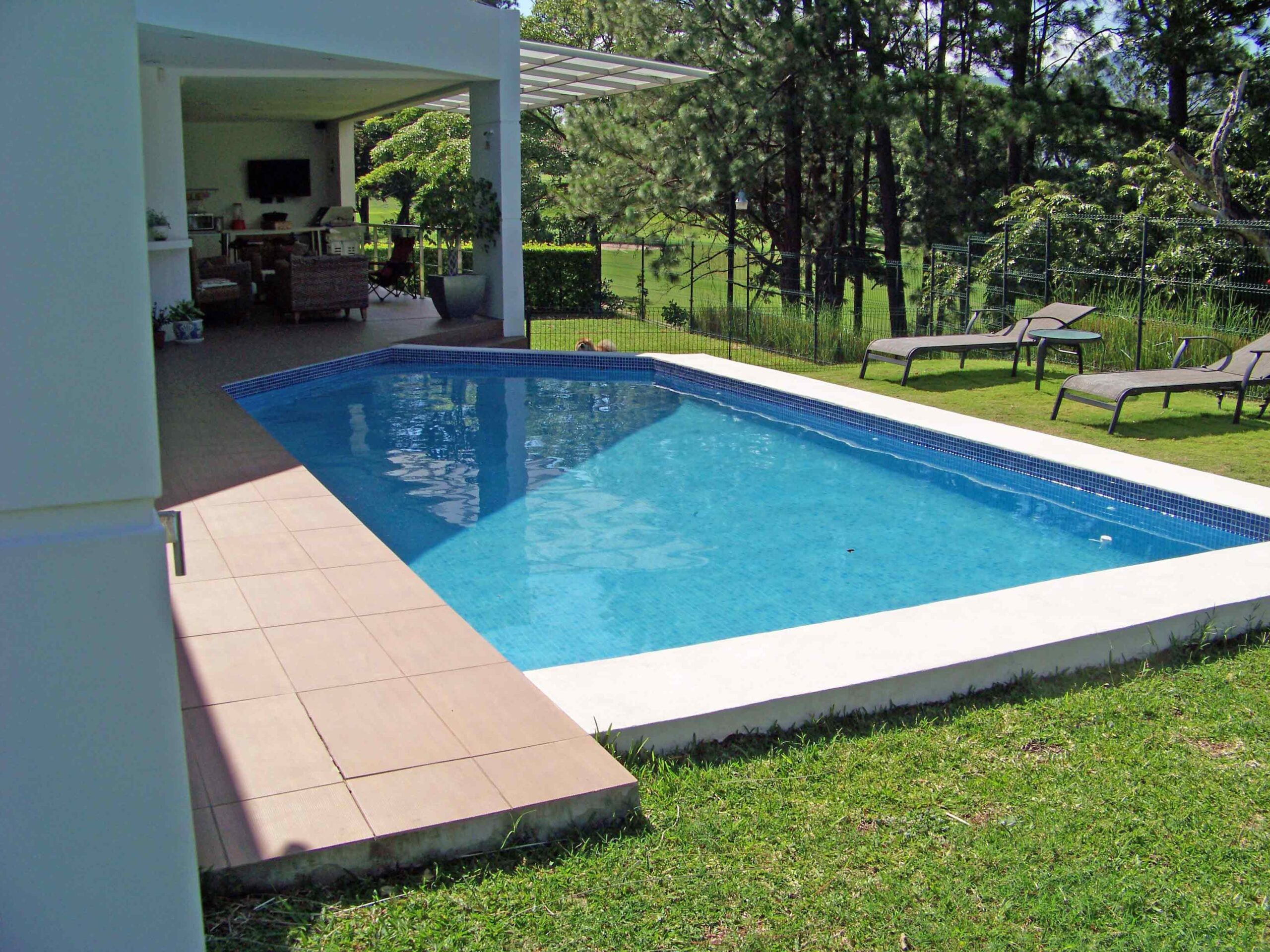
Short answer: in the rainy season pools turn green because rainwater dilutes the chlorine, lowers the pH and washes in soil, leaves and nutrients that feed algae. To prevent it you need to increase the maintenance frequency, check the water after every heavy downpour, run the filter for more hours and remove debris before it sinks.
In Costa Rica the rainy season runs roughly from May to November, with afternoon downpours almost every day in the Central Valley and on the Pacific side. These are the months when a neglected pool can turn green in a matter of days.
Why rain throws your pool off balance
It dilutes the chemicals. A heavy downpour can add several centimeters of water. That new volume lowers the chlorine concentration almost instantly.
It lowers pH and alkalinity. Rainwater is slightly acidic. With pH out of range, chlorine loses effectiveness and the water can become corrosive to the equipment.
It brings in nutrients. Leaves, pollen, soil and dust carried by the wind and by runoff from the garden are food for algae.
Less sun, more humidity. Cloudy, warm afternoons create ideal conditions for algae to grow.
The water level rises. If the water rises above the skimmer opening, the skimmer stops collecting debris from the surface.
What to do before the season starts
- Check the equipment. Make sure the pump pulls water well, the filter is clean and there are no leaks.
- Check the drainage around the pool. Water from the garden should not run into the pool. If it does, a slight slope or a channel solves it.
- Trim nearby trees. Fewer leaves means less organic matter in the water.
- Keep the basic products on hand: chlorine, pH adjuster, clarifier and algaecide.
- Consider a cover, especially if the pool goes days without being used.
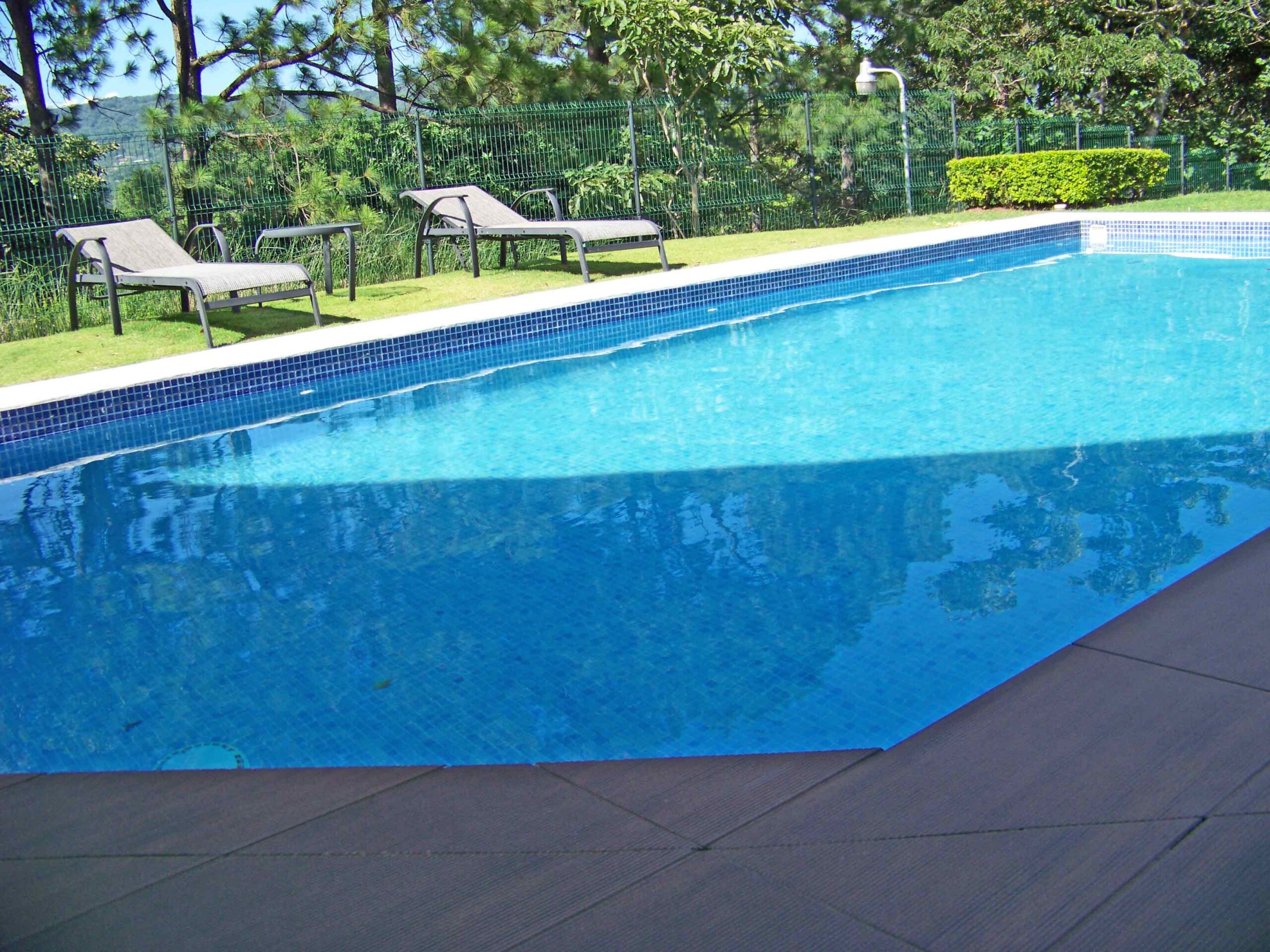
What to do during the season
- Increase the maintenance frequency to two visits per week if the pool is under trees or gets heavy use.
- Run the filter for more hours. With more debris, the water needs to pass through the filter more times.
- Remove leaves every day. A leaf left floating sinks the next day and starts to decompose.
- Empty the skimmer and pump strainer baskets more often.
- Watch the water level. If it rises too high, lower it so the skimmer keeps working.
What to do after a heavy downpour
- Skim out leaves and debris from the surface and the baskets.
- Test chlorine and pH. After heavy rain they almost always need correcting.
- Correct the pH first , then the chlorine: chlorine works best with pH between 7.2 and 7.6.
- Shock the pool if the water looks cloudy or the chlorine is very low.
- Brush the walls and floor so algae can't take hold.
- Leave the filter running for several hours straight.
If the pool is already green
A green pool can be fixed, but it takes more work:
- Remove as much debris as possible.
- Balance the pH.
- Shock the pool with chlorine and use a suitable algaecide.
- Brush every surface.
- Run the filter continuously and clean or backwash it several times.
- Use a clarifier or flocculant to gather the fine particles, then vacuum them up.
Depending on how far it has gone, it can take anywhere from a couple of days to a week. If the water doesn't improve, there may be a problem with the filter or pump that should be checked.
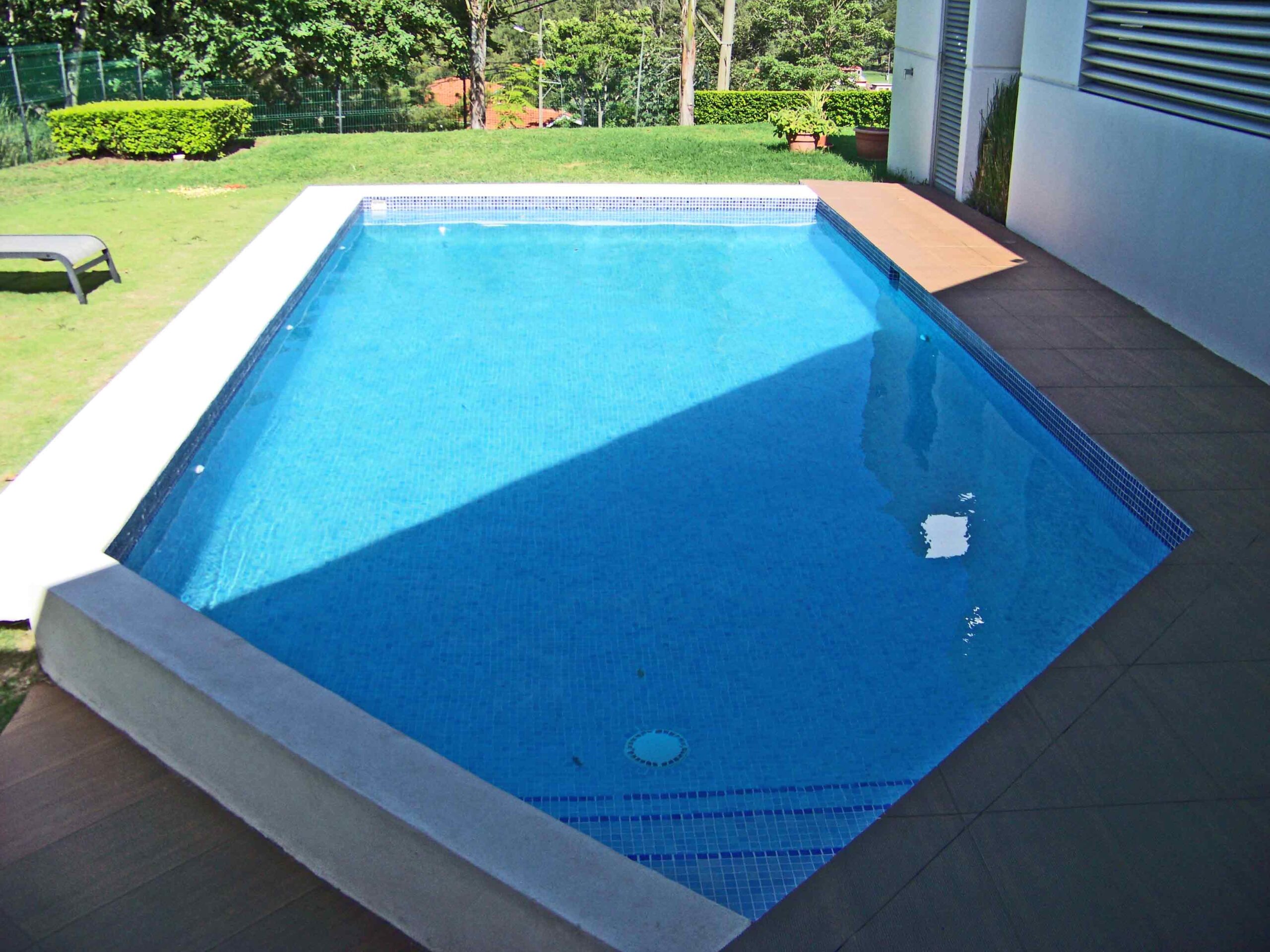
Common mistakes
- Waiting for the rain to stop before cleaning. In the meantime, algae keep growing.
- Adding chlorine without testing the pH. With high pH, much of the chlorine is wasted.
- Turning off the pump to save electricity. This is exactly when it's needed most.
- Mixing chemicals. Never mix products together before adding them; add them separately and follow the instructions.
Frequently asked questions
Should I cover the pool in the rainy season?
Yes, if it won't be used for several days. A cover keeps out leaves, soil and rainwater.
How many hours a day should the filter run in the rainy season?
It depends on the size of the pool and the equipment. In general, longer than in the dry season. A technician can calculate the time needed for all the water to pass through the filter several times a day.
Does a salt chlorinator help during this season?
Yes, because it produces chlorine continuously. Even so, after heavy rain you should check the pH and the salt level.
Rainy-season maintenance with LuxART
At Piscinas LuxART we maintain residential and commercial pools throughout the Greater Metropolitan Area, with algae control, chemical dosing and equipment checks. Learn about our maintenance service or message us on WhatsApp.